
Client Enrollment

Enrollment is the secure first-time pairing of a client with the Data Relay Link server. It establishes persistent management identity; it is not the same thing as the published SSH/web connection itself. Data Relay Link client lifecycle from the original field guide The lifecycle view helps separate first-time enrollment from normal service changes, updates, and final client/port retirement.
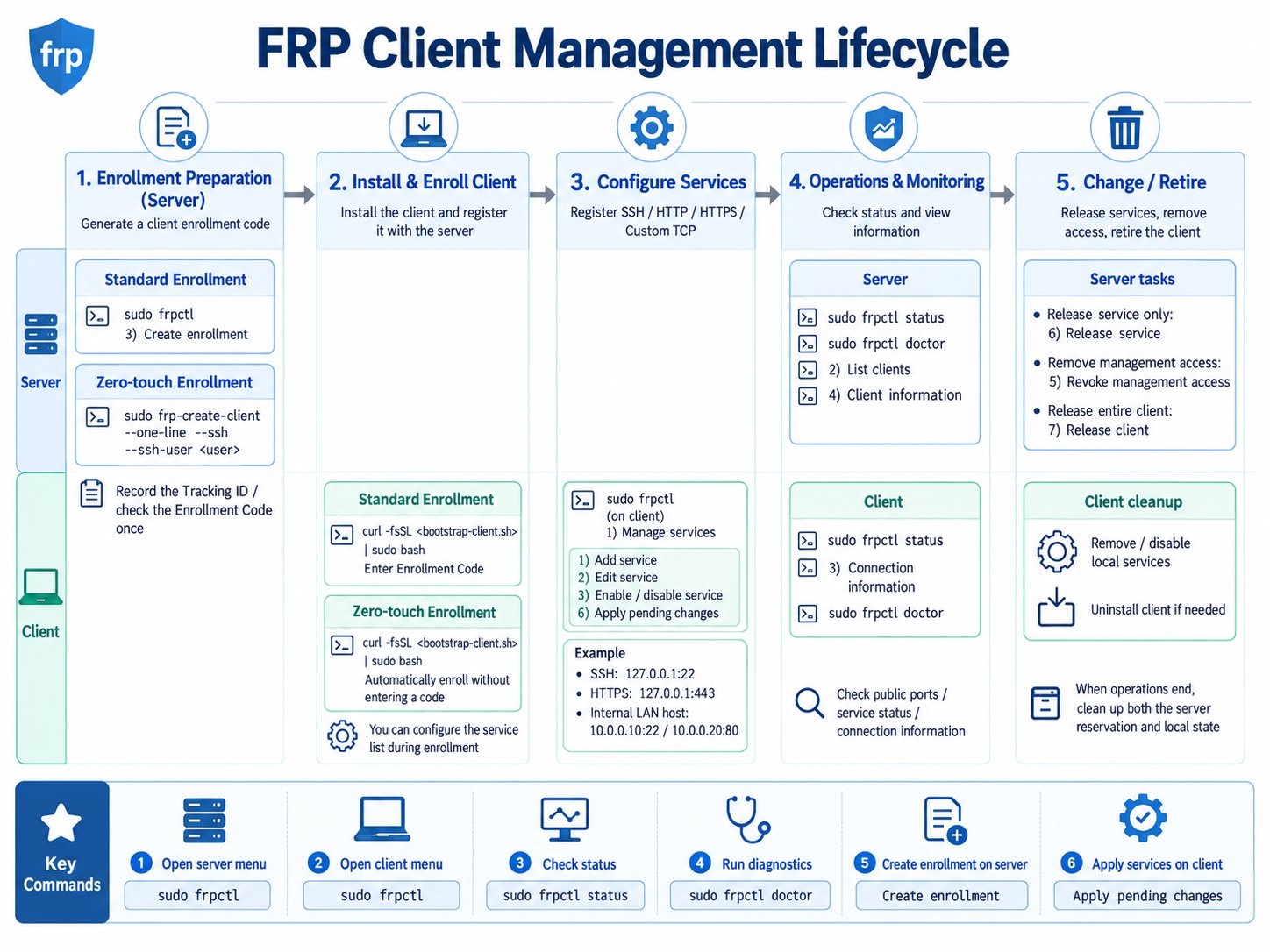
Choose the workflow

Zero-Touch

The easiest interactive CLI path is:
Then:
For an explicit SSH profile:
The generated bootstrap command contains a short-lived credential. Send it only through an appropriate private channel. The SSH user must already exist. Data Relay Link does not create users, enable SSH, change passwords, or install SSH keys.

Manual Enrollment Code

On the server:
The server produces enrollment information including a short-lived Enrollment Code, allocator URL, CA trust/fingerprint material, and a client bootstrap command. The remote user runs the generated command and enters the Enrollment Code when prompted. Typical service choices include:
The server owns the public service-port assignment. The client chooses the target host and target port.

Trust establishment

After that, normal supported operations use the persistent identity rather than repeatedly using the first-install secret.

Verify enrollment

Server:
Client:

Stable v2.2.1 enrollment lifecycle

Use the non-secret enrollment ID to revoke an active credential:
show enrollments never prints the secret itself. Enrollment retention/purge and lifecycle behavior documented by the v2.2.1 CLI are part of the stable release contract; mutable main may contain later changes.

Persistent identity

A successful enrollment creates a persistent CLIENT ID and management identity. Normal service edits, reboots, and supported updates do not require re-enrollment.
Last modified on September 10, 2026