Linux Client
Linux/systemd remains the product’s server and Linux-client foundation. In stable v2.2.1, client validation also includes macOS Apple Silicon and Windows 10 / PowerShell 5.1. For Linux, Ubuntu 24 physical, Rocky Linux 8.10/9.4, and Amazon Linux 2023 are Real E2E validated; Amazon Linux 2 remains container/CI portability only.What the client needs
Before enrollment, confirm:sudo/root access is available for installation- the client can make outbound connections to the Data Relay Link server public endpoints
- any service you want to publish already exists and is reachable from the client
- for SSH, the SSH user already exists and
sshdis running
Client lifecycle at a glance
The original field guide used the following lifecycle diagram to show where enrollment, service configuration, normal operation, updates, and removal fit together.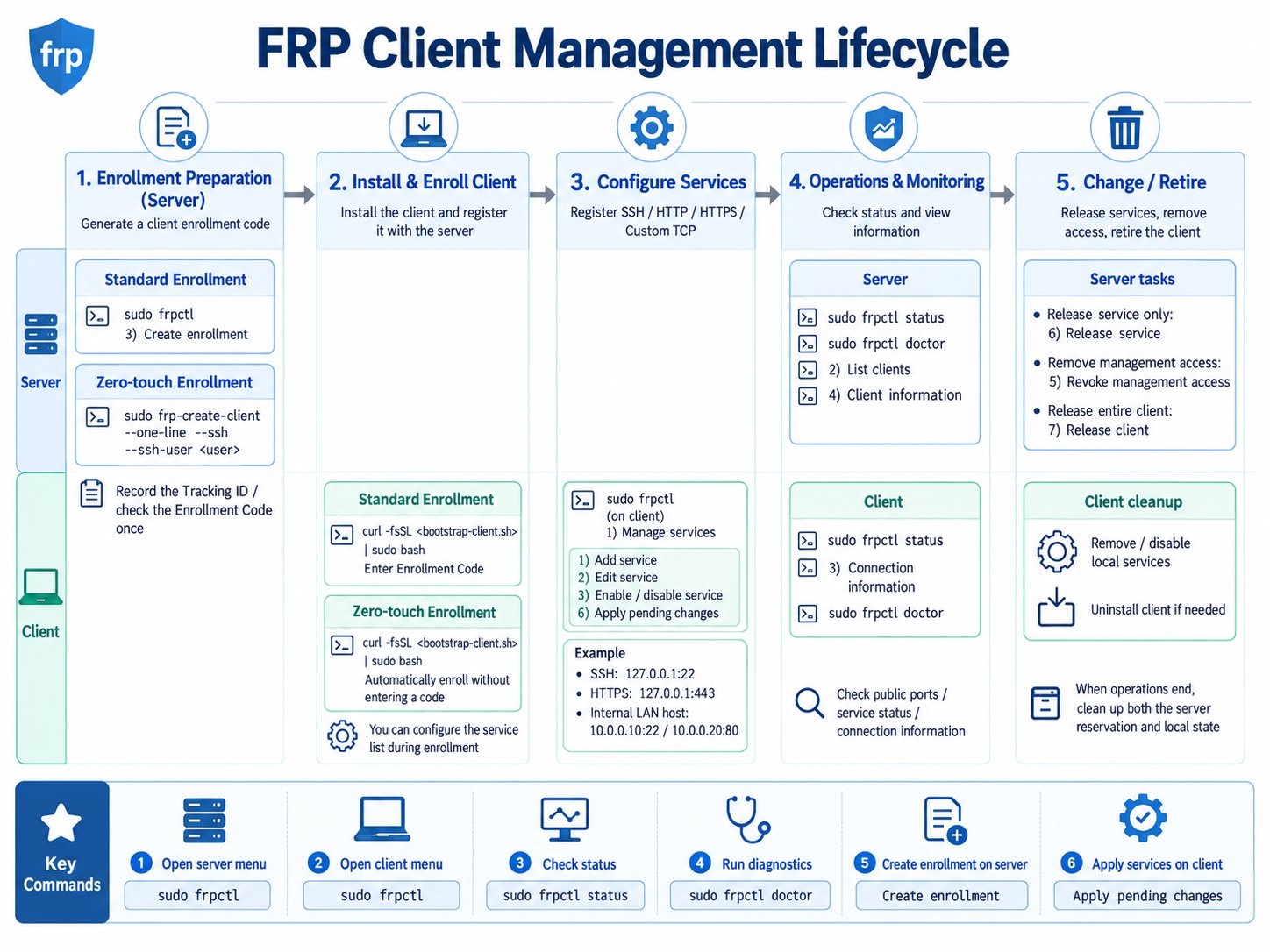
drlink, update without re-enrollment, and use the explicit lifecycle operations when retiring a client or releasing ports.
Choose enrollment method
Recommended: Zero-Touch
For the easiest interactive server workflow:<ssh-user> with an SSH account that already exists on the target machine. Run the exact generated command on the client; do not reconstruct the bootstrap payload manually.
Manual Enrollment Code
On the server:What happens during enrollment
Verify on the client
Verify on the server
Changing services later
Client-side service edits are staged:discard before apply if you want to throw away pending changes.